Embarking on the comparison between Window and Split ACs in 2025, this analysis aims to shed light on the key differences and advancements in the realm of air conditioning technology.
Delving into the specifics of each type of AC unit, we will explore their installation, maintenance, design, and energy efficiency features to provide a holistic view of the topic.
Overview of Window and Split ACs
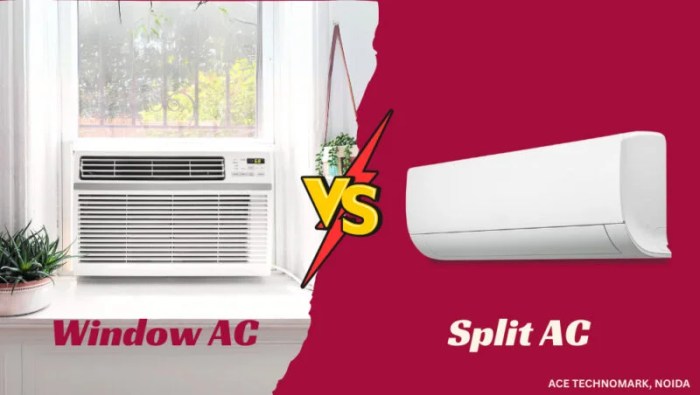
Window air conditioners and split air conditioners are two common types of cooling systems used in households and commercial spaces. Window ACs are typically installed in a window or a specially designed wall opening, with all components contained in a single unit.
On the other hand, split ACs consist of two units
an indoor unit that is mounted on a wall inside the room and an outdoor unit placed outside the building.
The key difference between window and split ACs lies in their installation and design. Window ACs are easier to install as they come as a single unit, while split ACs offer more flexibility in terms of placement and are known for their quieter operation.In 2025, both window and split ACs continue to be popular choices for cooling spaces.
The preference between the two types often depends on factors such as room size, aesthetics, installation requirements, and budget considerations.
Popularity of Window and Split ACs in 2025
Despite advancements in technology and the introduction of newer cooling systems, window and split ACs remain popular choices in 2025 due to their efficiency, affordability, and widespread availability.
- Window ACs are favored for smaller spaces and rooms with limited installation options.
- Split ACs are preferred for larger rooms and spaces that require more precise temperature control.
- Both types of ACs are widely used in residential buildings, offices, and commercial establishments due to their reliability and cooling capabilities.
Technology Advancements in Window and Split ACs
In recent years, both window and split ACs have seen significant technological advancements aimed at enhancing performance, energy efficiency, and user convenience.
Latest Technological Advancements in Window ACs
Window ACs have evolved to incorporate innovative features such as:
- Smart Connectivity: Many modern window ACs now come equipped with Wi-Fi connectivity, allowing users to control the temperature and settings remotely through their smartphones or smart home devices.
- Inverter Technology: Window ACs with inverter technology have become more common, offering energy-efficient cooling by adjusting compressor speed based on cooling requirements.
- Self-Cleaning Functions: Some window AC models now come with self-cleaning features that prevent the growth of mold and bacteria, ensuring better air quality.
Evolution of Technology in Split ACs by 2025
Split ACs have also seen advancements in technology, including:
- Dual Inverter Compressor: Split ACs now feature dual inverter compressors that provide faster cooling, quieter operation, and higher energy efficiency compared to traditional compressors.
- Variable Refrigerant Flow (VRF) Technology: VRF technology in split ACs allows for precise temperature control in different zones of a room or building, leading to improved comfort and energy savings.
- Air Purification Systems: Many split ACs now come with advanced air purification systems that can remove allergens, pollutants, and odors from the air, promoting a healthier indoor environment.
Energy Efficiency Features of Window and Split ACs
When it comes to energy efficiency, split ACs tend to have an edge over window ACs due to features like:
- Higher Energy Star Ratings: Split ACs often have higher energy star ratings compared to window ACs, indicating better energy efficiency and lower electricity consumption.
- Variable Speed Compressors: The use of variable speed compressors in split ACs allows for precise cooling control and energy savings by adjusting compressor speed based on cooling needs.
On the other hand, with the introduction of inverter technology in window ACs, the energy efficiency gap between window and split ACs has narrowed, making window units a more viable option for those looking to save on energy costs.
Installation and Maintenance
Installing and maintaining an air conditioning unit is essential to ensure its optimal performance and longevity
Installation Requirements
When it comes to installation, window ACs are typically easier and more straightforward to install compared to split ACs. Window AC units are designed to fit in a standard-sized window opening, making the installation process relatively simple and quick. On the other hand, split ACs require more complex installation as they consist of two separate unitsthe indoor and outdoor units.
This usually involves mounting the indoor unit on a wall inside the room and placing the outdoor unit outside the building, connected by refrigerant lines. As a result, split AC installation may require professional help, adding to the overall cost.
Maintenance Procedures
In terms of maintenance, window ACs are generally easier to clean and maintain compared to split ACs. Window AC units have a single unit that can be easily accessed for cleaning the filters and other components. On the other hand, split ACs have two units that require separate maintenancethe indoor unit and the outdoor unit.
Cleaning the filters and coils of both units can be more time-consuming and may require professional assistance. Additionally, split ACs may need regular maintenance to ensure optimal performance and efficiency.
Cost Implications
When it comes to cost, window ACs are usually more cost-effective in terms of both installation and maintenance. The simpler installation process of window ACs can save on installation costs compared to the more complex installation of split ACs. Additionally, maintenance for window ACs is generally more affordable as they have fewer components that need regular servicing.
On the other hand, split ACs may incur higher installation costs due to the need for professional installation services. Maintenance of split ACs may also be more expensive due to the separate units that require servicing.
Design and Aesthetics
When it comes to choosing between window AC units and split ACs in 2025, design and aesthetics play a crucial role in enhancing the overall look and feel of a space. Let's delve into the comparison of design aesthetics and user experience impact of modern window and split AC units.
Modern Window AC Units
Modern window AC units have evolved in terms of design aesthetics to blend seamlessly with contemporary interiors. Manufacturers now offer sleek and compact window AC models that come in a variety of colors and finishes to complement different decor styles.
These units are designed to be less obtrusive and more visually appealing, making them a popular choice for smaller spaces or rooms with limited installation options.
Integration of Split ACs with Interior Design Trends
Split ACs have become a preferred choice for many homeowners and designers due to their versatility in integration with interior design trends. In 2025, split AC units are designed to be more stylish and sophisticated, with sleek indoor units that can be mounted high on walls or even concealed within ceilings for a seamless look.
The compact and modern design of split ACs allows them to blend effortlessly with various decor styles, enhancing the overall aesthetics of a space.
Impact of Design on User Experience
The design of both window and split AC units plays a significant role in enhancing user experience. Aesthetically pleasing AC units can contribute to a more comfortable and visually appealing environment, creating a positive impact on the overall ambiance of a room.
Additionally, modern designs often prioritize functionality and ease of use, offering features like intuitive controls, energy-efficient modes, and quieter operation to improve user satisfaction.
Closure
In conclusion, the comparison between Window and Split ACs offers valuable insights for consumers looking to make an informed decision when choosing an air conditioning system. By understanding the nuances of each type, individuals can optimize their indoor comfort while considering factors such as aesthetics, cost, and energy efficiency.
FAQ Compilation
What are the key differences between Window and Split ACs in terms of design?
Window ACs are typically designed to fit into windows, while Split ACs have an indoor unit mounted on a wall and an outdoor unit.
Which type of AC is more energy-efficient, Window or Split?
Split ACs are generally more energy-efficient than Window ACs due to their advanced technology and design.
What is the average lifespan of a Window AC compared to a Split AC?
On average, Split ACs tend to have a longer lifespan compared to Window ACs, as they are typically more durable and have better maintenance options.